eviden-logo

Evidian > Products > SafeKit: All-in-One SANless High Availability & Application Clustering Software > High Availability for Siemens SIMATIC PCS 7: 2-Node SANless Cluster

High Availability for Siemens SIMATIC PCS 7: 2-Node SANless Cluster

How SafeKit Implements SIMATIC PCS 7 Redundancy in Hyper-V?

Script ld+json for SEO and LLMO

SafeKit for Siemens SIMATIC PCS7 inside Hyper-V delivers seamless High Availability while significantly reducing TCO (Total Cost of Ownership). By eliminating the hardware and operational overhead of traditional clustering, SafeKit offers a lean, 2-node HA alternative to complex virtualization stacks.

  • Zero SAN Investment for HA: Achieve full redundancy using shared-nothing architecture. It works with standard local disks, removing the need for expensive SAN hardware, fiber channel switches, and specialized storage maintenance usually required for High Availability.
  • Hardware-Agnostic Redundancy: Avoid vendor lock-in. Build your High Availability cluster using any server brand or internal storage type, extending the lifecycle of existing hardware and lowering replacement costs.
  • Simplified HA Operations: No specialized "clustering expert" is required to maintain uptime. SafeKit’s plug-and-play modules and unified web console reduce the man-hours needed for HA deployment and daily monitoring.
  • Cost-Predictable Licensing: Unlike subscription-heavy models, SafeKit provides High Availability via a one-time perpetual license. This ensures predictable budgeting and eliminates the risk of annual price hikes for critical infrastructure.
  • True 2-Node HA Efficiency: Most High Availability solutions require a third "witness" node to prevent split-brain. SafeKit delivers a robust 2-node cluster, saving 33% on hardware, power, and rack space from day one.

By consolidating High Availability into a lightweight software layer, SafeKit delivers enterprise-grade redundancy and business continuity at a fraction of the cost of traditional virtualization suites.

SafeKit High Availability Siemens SIMATIC PCS7 Cluster Architecture
SafeKit HA cluster for Siemens SIMATIC PCS7 inside Hyper-V

How the Evidian SafeKit software simply implements a Siemens SIMATIC PCS7 high availability cluster without shared storage on a SAN?

What is the SafeKit HA solution for Siemens SIMATIC PCS7?

Evidian SafeKit brings high availability to Siemens SIMATIC PCS7 between two servers of any brand.

This article explains how to implement quickly a Siemens SIMATIC PCS7 cluster without shared storage on a SAN and without specific skills.

The principle of the solution is to put Siemens SIMATIC PCS7 in a virtual machine under Hyper-V. SafeKit implements real-time replication and automatic failover of the virtual machine.

Note that Hyper-V is the free hypervisor included in all Windows versions (even Windows for PC).

How can I run multiple applications in a high-availability Siemens SIMATIC PCS7 cluster without a SAN?

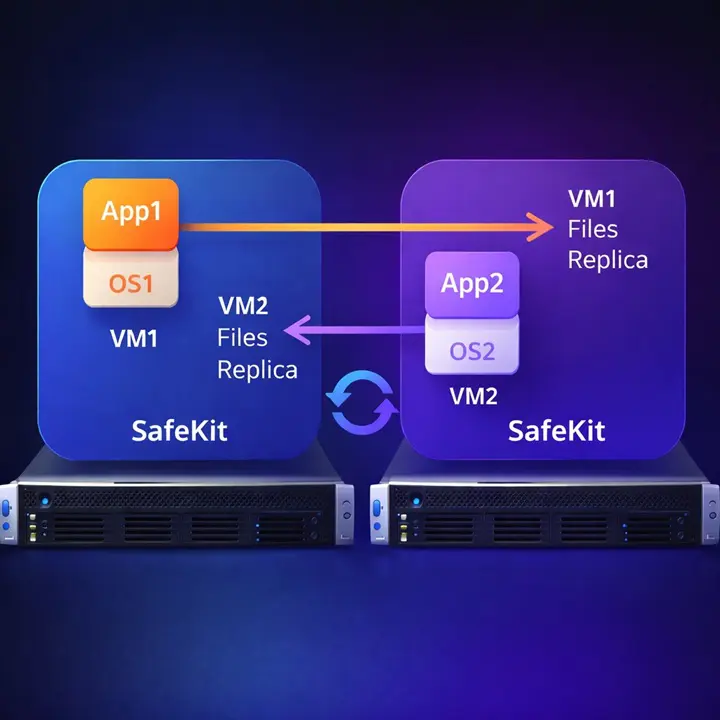
Several applications can be put in several virtual machines replicated and restarted by SafeKit. You have the possibility to migrate each virtual machine between both servers with the SafeKit console and thus balance the load in an active-active cluster.

Should I choose high availability at the application level or the virtual machine (VM) level?

With SafeKit, you have the flexibility to choose the redundancy model that fits your needs.
VM-level redundancy (for Hyper-V or KVM) is the simplest to implement as it replicates the entire virtual machine, requiring no knowledge of the internal application.
Alternatively, application-level redundancy is more granular; it only replicates specific data folders and restarts the application services rather than the entire OS.
While VM-level HA is easier to set up, application-level HA is hypervisor-agnostic and can run across physical, virtual, or cloud environments.

What are the distinctive advantages of SafeKit for Hyper-V high availability compared to competitors?

SafeKit differentiates itself from traditional Hyper-V clustering solutions through its shared-nothing architecture and simplified management. While most competitors require a central SAN or vSAN to manage VM failover, SafeKit provides:

  • Integrated Real-Time Replication: Data synchronization is built directly into the solution, ensuring that Siemens SIMATIC PCS7 virtual machines are mirrored synchronously without the overhead of managing a separate storage layer.
  • Simplified 2-Node Clustering: Unlike enterprise stacks that recommend a 3-node "witness" quorum, SafeKit delivers full high availability with just two redundant servers. Learn more about our heartbeat and quorum mechanism.
  • Unified Management: Administrators can manage VM failover, replication, and load balancing through a single SafeKit console , making it accessible to teams without specialized clustering expertise.
  • Custom Checkers: SafeKit goes beyond hardware monitoring; it utilizes custom checkers to detect if a VM has crashed, automatically triggering a local restart or a failover to the redundant node. The system is also highly extensible, allowing for the easy integration of new, user-defined custom checkers tailored to your specific environment.

How does SafeKit reduce the TCO (Total Cost of Ownership) compared to VMware-type solutions?

Unlike most high-availability solutions on the market, SafeKit is designed to operate with the absolute minimum hardware overhead, without compromising security or reliability. Key savings compared to VMware or complex open-source alternatives include:

  • True 2-Node Efficiency: While most enterprise stacks or open-source solutions require a 3-node "witness" quorum to prevent split-brain, SafeKit delivers full high availability with just two redundant servers.
  • Zero Storage Costs: SafeKit uses a shared-nothing architecture that works with local disks, removing the need for expensive SAN or vSAN hardware and specialized storage networking.
  • No Forced Subscriptions: Unlike modern subscription-only models, SafeKit offers a perpetual license. You own your software, avoiding the "subscription trap" and unpredictable annual price hikes.
  • Low Operational Expense (OPEX): As a plug-and-play solution, it requires no specialized training or expensive external consultancy for maintenance, unlike complex open-source clustering tools.
  • CPU-Independent Pricing: Licensing is independent of the number of CPUs or cores. With just two licenses for two nodes, you can protect multiple Hyper-V virtual machines.

Is it possible to set up a Siemens SIMATIC PCS7 cluster without SAN or complex clustering skills?

Yes. This article explains how to quickly implement a Hyper-V cluster without the need for specialized SAN management or complex HA clustering skills. By using SafeKit’s automated failover scripts to handle the replication and restart of Siemens SIMATIC PCS7 virtual machines, you get a robust redundancy solution that is significantly simpler to deploy and maintain than traditional enterprise virtualization stacks.

Beyond Siemens SIMATIC PCS7, which applications and environments can SafeKit protect?

SafeKit is a versatile high-availability solution that extends far beyond standard virtual machine failover. It enables synchronous real-time replication and automatic failover for a wide range of critical workloads, including:

  • Virtual & Physical Environments: Complete Hyper-V or KVM virtual machines.
  • Container Orchestration: Docker, Podman, and K3s (Kubernetes) environments.
  • Data & Services: Individual file directories, services, and various databases.
  • Cloud Infrastructure: High availability for Cloud applications.

Explore the full list of supported HA solutions here.

How the SafeKit Hyper-V cluster works with Siemens SIMATIC PCS7?

The following steps are described for one virtual machine inside one mirror module. Each replicated virtual machine runs in an independent mirror module (with a maximum of 32 virtual machines) with a primary server that can be either the Hyper-V server 1 or the Hyper-V server 2.

1. How does real-time replication work for Siemens SIMATIC PCS7 ?

Server 1 (PRIM) runs the VM (virtual machine) containing Siemens SIMATIC PCS7. SafeKit replicates in real time the VM files (virtual hard disk, VM configuration). Only changes made in the files are replicated across the network.

File replication at byte level in a mirror Siemens SIMATIC PCS7 cluster

The replication is synchronous with no data loss on failure contrary to asynchronous replication.

You just have to configure the VM directory name in SafeKit. There are no pre-requisites on disk organization. The directory may be located in the system disk.

2. What happens during an automatic Siemens SIMATIC PCS7 failover?

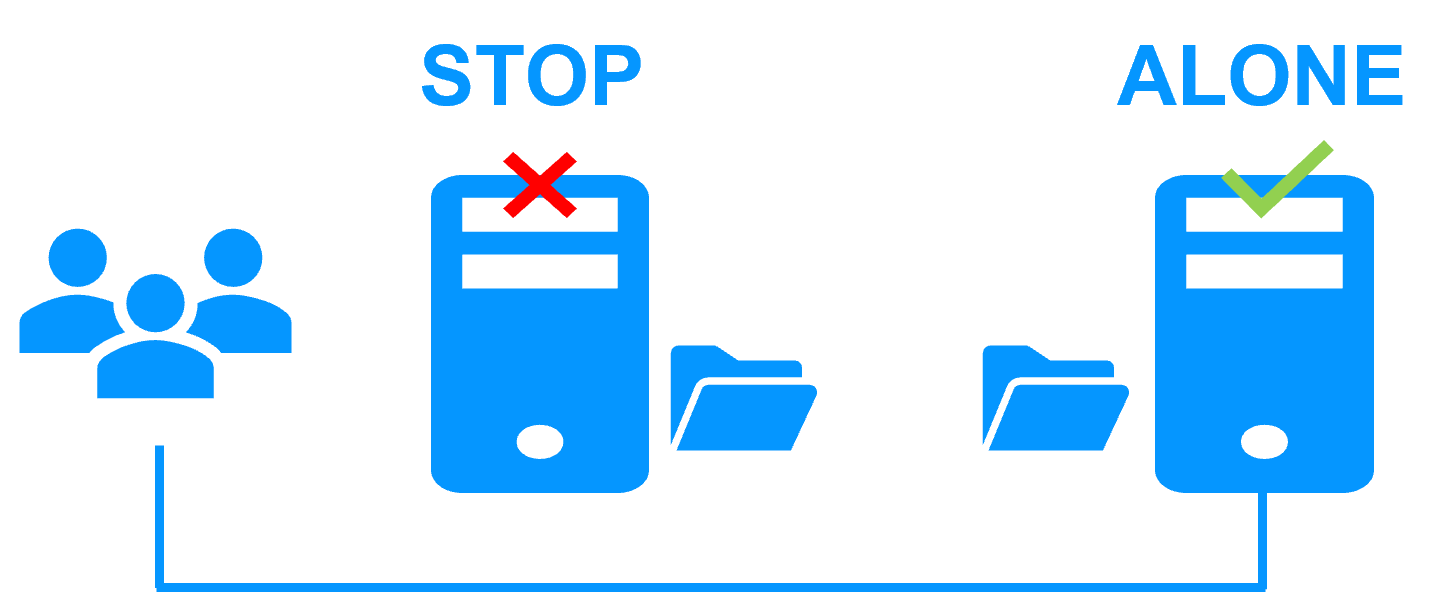
When Server 1 fails, Server 2 takes over. SafeKit restarts the VM containing Siemens SIMATIC PCS7 on Server 2. Hyper-V finds the files replicated by SafeKit uptodate on Server 2.
The VM continues to run on Server 2 by locally modifying its files that are no longer replicated to Server 1.

Failover of Siemens SIMATIC PCS7 in a mirror cluster

The failover time is equal to the fault-detection time (set to 30 seconds by default) plus the VM reboot time.

3. How is data synchronized after a Siemens SIMATIC PCS7 failure?

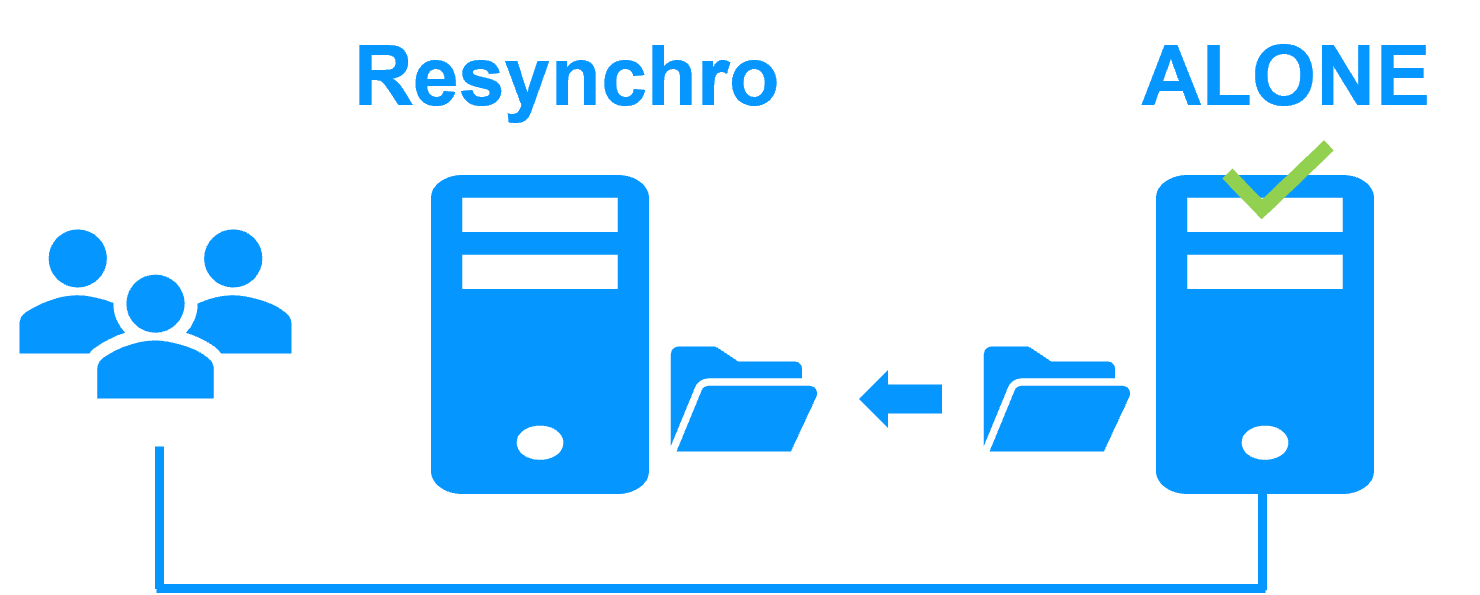
Failback involves restarting Server 1 after fixing the problem that caused it to fail. SafeKit automatically resynchronizes the VM files.

Failback in a mirror Siemens SIMATIC PCS7 cluster

Failback takes place without disturbing the VM containing Siemens SIMATIC PCS7, which can continue running on Server 2.

4. How is normal Siemens SIMATIC PCS7 operation restored?

After reintegration, the VM files are once again in mirror mode, as in step 1. The system is back in high-availability mode, with the VM containing Siemens SIMATIC PCS7 running on Server 2 and SafeKit replicating file updates to Server 1.

Return to normal operation in a mirror Siemens SIMATIC PCS7 cluster

If the administrator wishes the VM to run on Server 1, this can be done manually through the web console at an appropriate time, or automatically through configuration.

How to configure a SafeKit Siemens SIMATIC PCS7 Cluster?


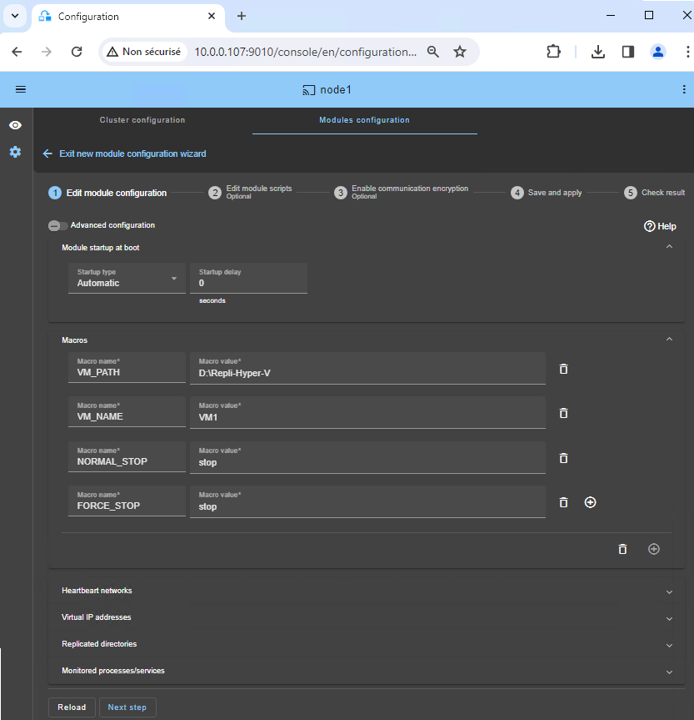
SafeKit Web Console: 2-node Siemens SIMATIC PCS7 cluster dashboard for VM replication and automatic failover.

The SafeKit web console provides an intuitive interface to configure high availability of your critical applications. In just a few steps, you can configure a SafeKit Siemens SIMATIC PCS7 cluster to ensure business continuity:

  • Put in VM_PATH, the root path of the replicated directory (D:/Repli-Hyper-V) where the Siemens SIMATIC PCS7 VM files reside.
  • Enter in VM_NAME, the name of the virtual machine (VM1) containing Siemens SIMATIC PCS7.

The SafeKit cluster includes a dedicated split-brain checker to resolve network isolation issues without the need for a third witness machine or an additional heartbeat network.

How to monitor a SafeKit Siemens SIMATIC PCS7 cluster?


SafeKit Web Console: Real-time monitoring of a 2-node mirror Siemens SIMATIC PCS7 cluster showing PRIM and SECOND states with active data replication.

The SafeKit management console offers a unified view of your high availability infrastructure. It allows administrators to monitor the operational state of the cluster and track data synchronization in real-time.

For a 2-node Siemens SIMATIC PCS7 cluster, the console clearly displays the roles of each server:

  • PRIM (Primary): The active node currently running the application and managing the Virtual IP. It performs writes to the local storage and real-time replication to the secondary node.
  • SECOND (Secondary): The standby node receiving synchronous byte-level updates. It is ready to take over instantly if the Primary fails.
  • ALONE State: Visually alerts you when the cluster is running on a single node (e.g., during maintenance or after a failure), indicating that redundancy is temporarily lost.
  • Resynchronization Progress: When a failed node recovers, its status turns orange during background data reintegration, ensuring no downtime during the "return to normal" phase.

Beyond simple status icons, the interface provides one-click failover orchestration for planned maintenance without interrupting user activity.

Note that if you deploy several VMs for replication and failover, you will have multiple PRIM/SECOND widgets. This allows independent failover for each VM and the ability to distribute the load across servers.

Comparison: SafeKit for Siemens SIMATIC PCS7 inside Hyper-V vs. Native Hyper-V Clustering

Feature SafeKit for Siemens SIMATIC PCS7 inside Hyper-V MS Failover Clustering Hyper-V Replica
Architecture SANless (Shared-Nothing) Shared Storage (SAN/S2D) Shared-Nothing
Failover Logic Fully Automatic Fully Automatic Manual Intervention (not a HA solution)
Replication Type Synchronous (Zero RPO) Synchronous (via SAN) Asynchronous (Data Loss)
Quorum Requirement None (Built-in Checker) 3rd Node / Cloud Witness None
AD Dependency Independent Required (Active Directory) Independent
Deployment Complexity Low (< 30 Minutes) High (AD, Storage, Quorum) Medium

Conclusion

By eliminating the need for a SAN and simplifying the setup—removing dependencies like Active Directory and specialized Quorum configurations—SafeKit provides a lean, hardware-agnostic alternative. This results in a significantly lower TCO while ensuring that your Siemens SIMATIC PCS7 environment remains resilient with zero data loss and automated recovery.

Video Guide: Configuring a SafeKit HA cluster for Siemens SIMATIC PCS7 inside Hyper-V

SafeKit Video: Virtual Machine-Level Clustering with Hyper-V (5:15)

In this video, discover how SafeKit implements high availability for Hyper-V without the complexity of a SAN. Learn to configure virtual machine replication across two nodes to ensure seamless failover for your critical virtualized workloads.

Video Highlights

  1. Architecture overview: 2 Hyper-V nodes and 2 virtual machines (0:49)
  2. Configuring the cluster and the hyperv.safe modules (1:59)
  3. Live testing: VM replication, migration, and automatic failover on crash (2:26)

About products under Siemens LMS licensing

  • To avoid the broken Siemens license on failover, the dongle containing the Siemens key can be put in a USB over IP device (like DIGI AnywhereUSB).
  • The dongle can also be put in an external PC with the LMS license server on the PC (for example the PC which manages the Siemens graphical interface).
  • In recent versions of the Siemens licensing system, the license key can be put in the Trusted Platform Module of the VM (enable before TPM on the VM). Then, the license key will be replicated by SafeKit as well as all VM files.

SafeKit, a recognized solution on the SCADA market

Solution preferred by Siemens

SafeKit with the Siemens Desigo CC SCADA system

SafeKit is available in the Siemens marketplace with its SCADA sofware: Desigo CC (building management), SIMATIC WinCC, SIMATIC PCS 7 and also with the Siveillance suite (video and access control).

SafeKit is deployed by Siemens in Australia, France, the Netherlands, Qatar, Switzerland, the UAE, the UK, the US.

SafeKit chosen by Alstef Group

SafeKit with the Alstef Group SCADA system, BAGware

Alstef Group, a key player in baggage handling systems, deploys SafeKit for redundancy and high availability of its SCADA software suite, BAGware.

SafeKit has been deployed by Alstef Group in many airports with BAGware.

Fives Syleps has chosen SafeKit

SafeKit with the Fives Syleps automated logistics system

Fives Syleps, a key player in automated logistics, deploys SafeKit for redundancy and high availability of its software suite.

SafeKit has been deployed by Fives Syleps in many factories.

🔍 SafeKit High Availability Navigation Hub

Explore SafeKit: Features, technical videos, documentation, and free trial
Resource Type Description Direct Link
Key Features Why Choose SafeKit for Simple and Cost-Effective High Availability? See Why Choose SafeKit for High Availability
Deployment Model All-in-One SANless HA: Shared-Nothing Software Clustering See SafeKit All-in-One SANless HA
Partners SafeKit: The Benchmark in High Availability for Partners See Why SafeKit Is the HA Benchmark for Partners
HA Strategies SafeKit: Infrastructure (VM) vs. Application-Level High Availability See SafeKit HA & Redundancy: VM vs. Application Level
Technical Specifications Technical Limitations for SafeKit Clustering See SafeKit High Availability Limitations
Proof of Concept SafeKit: High Availability Configuration & Failover Demos See SafeKit Failover Tutorials
Architecture How the SafeKit Mirror Cluster works (Real-Time Replication & Failover) See SafeKit Mirror Cluster: Real-Time Replication & Failover
Architecture How the SafeKit Farm Cluster works (Network Load Balancing & Failover) See SafeKit Farm Cluster: Network Load Balancing & Failover
Competitive Advantages Comparison: SafeKit vs. Traditional High Availability (HA) Clusters See SafeKit vs. Traditional HA Cluster Comparison
Technical Resources SafeKit High Availability: Documentation, Downloads & Trial See SafeKit HA Free Trial & Technical Documentation
Pre-configured Solutions SafeKit Application Module Library: Ready-to-Use HA Solutions See SafeKit High Availability Application Modules